
The Palestinian Ministry of Health in the Gaza Strip released its annual report on deaths in the Strip for 2025. The report revealed that the year saw 24,650 officially documented deaths , four times the number recorded in a normal year before the war. Of these, 17,286 were killed directly by the Israeli occupation. The remainder died in destroyed hospitals, tents without medicine, and in a city where the United Nations declared a famine. All of this occurred in a year punctuated by two ceasefires, and which was not the deadliest year of the war.
These figures are not estimates from activists or opinion polls. They represent the official death registry issued annually by the Ministry of Health's Health Information Unit, using the same methodology employed by health ministries worldwide, and classifying causes of death according to the International Classification of Diseases (ICD-10). This is the first annual report on deaths since 2022, following the destruction of electronic registration systems in 2023 and 2024 due to the war. The report does not shy away from calling what happened by its name, referring to it as "the ongoing war of extermination against the Gaza Strip."
This article reads the report in its entirety, placing its figures alongside the records of the Shirin Observatory, which documents the martyrs by name, age, and location, as well as independent research and accounts of other wars. The conclusion is the same: what happened in Gaza was not a war that accidentally struck civilians, but rather the systematic destruction of an entire society, including its children, women, and all aspects of life within it .
One year is four years of death
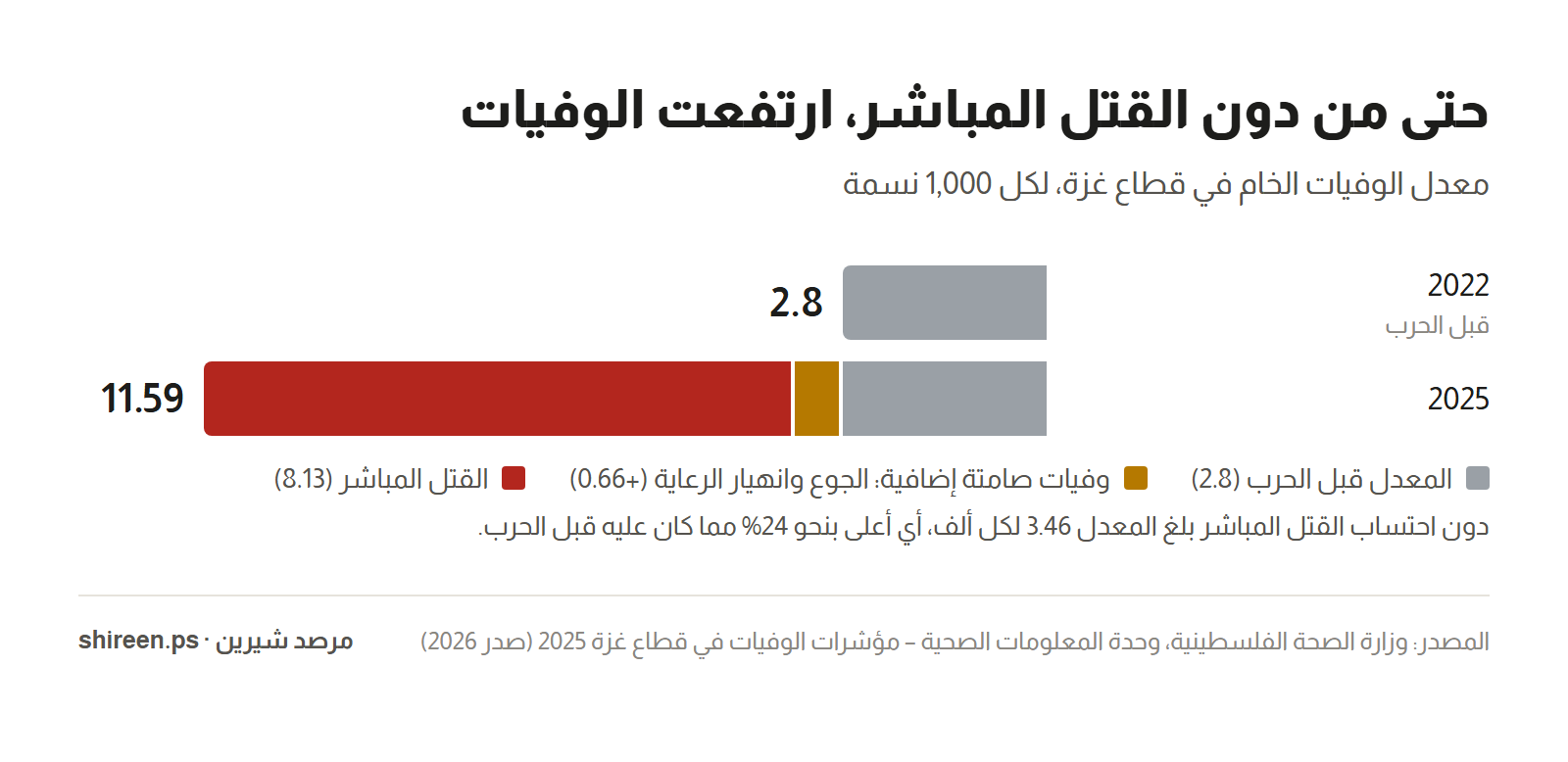
Between 2015 and 2022, the number of deaths in the Gaza Strip ranged from 4,800 to 7,100 annually. By 2025, the number of documented deaths had jumped to 24,650 . The crude death rate rose from 2.8 per thousand people before the war to 11.59 , calculated based on the population figure adopted by the Palestinian Central Bureau of Statistics for 2025 (2,127,034 people).
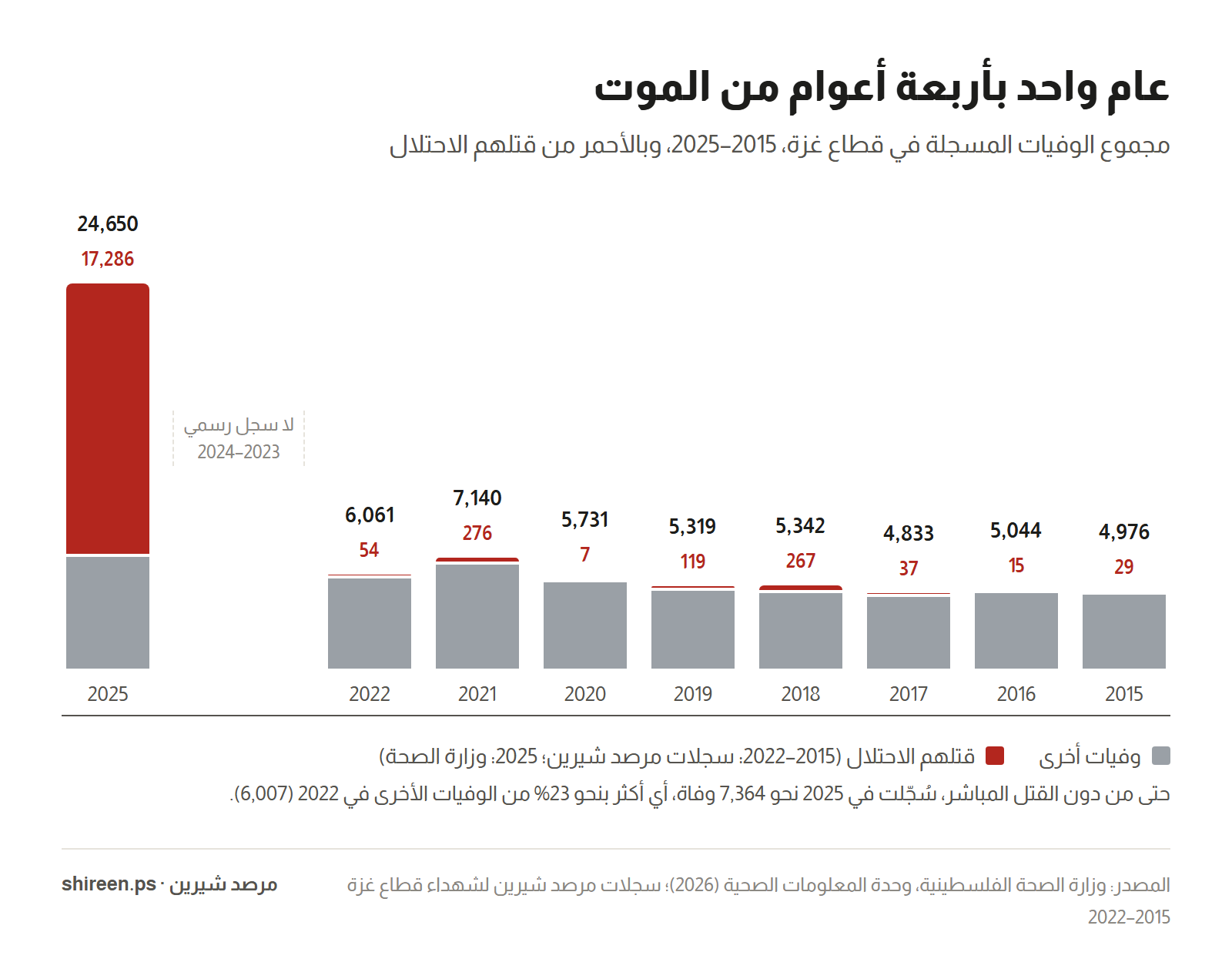
The report measures the disparity more precisely: the death rate due to "war operations and accidents" reached 887.2 per 100,000 people , compared to only 8.9 in 2022—nearly a hundred times higher . The ministry describes it as "an unprecedented rate in the history of monitoring deaths in the Gaza Strip."
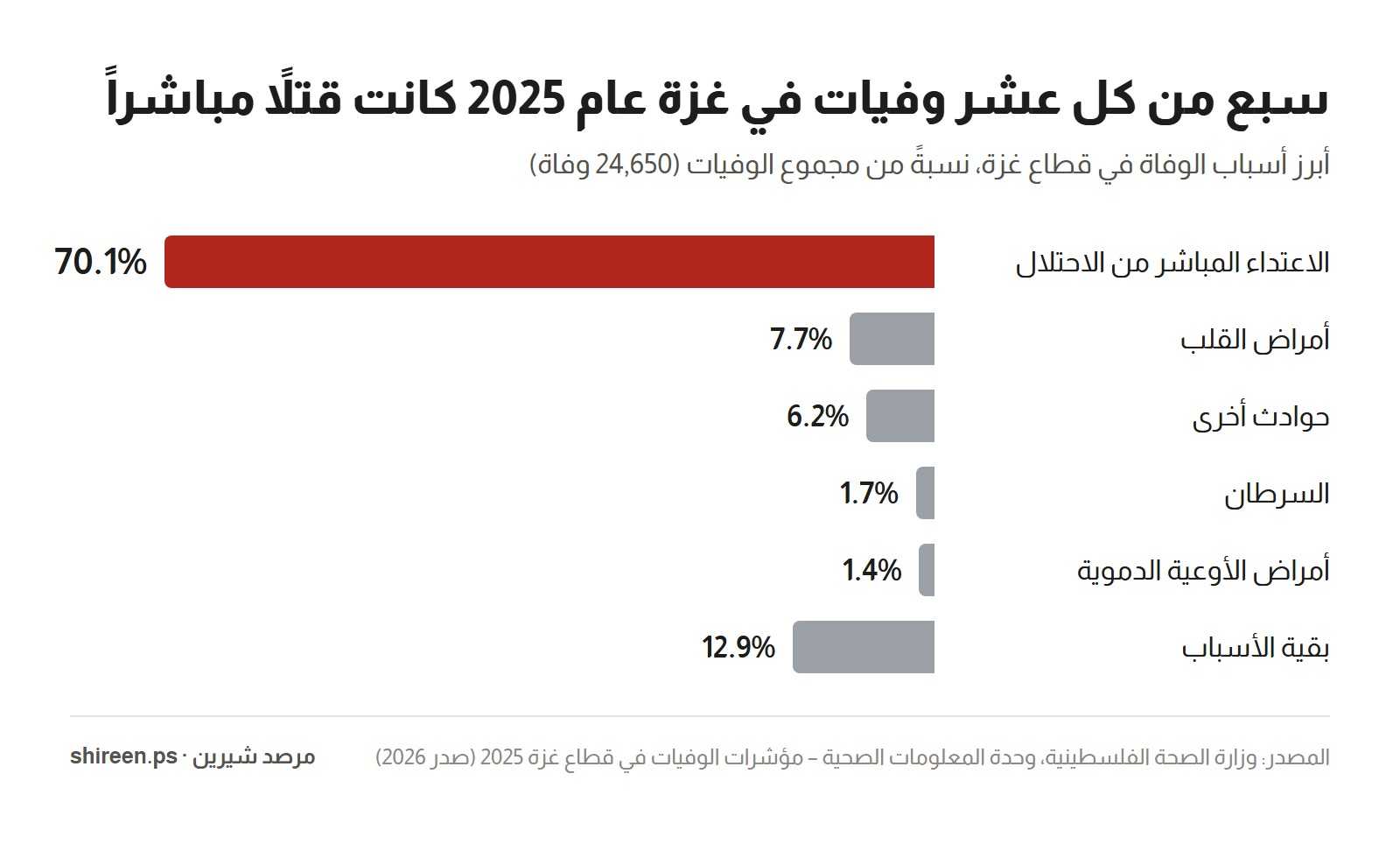
The ministry adds to the direct assault (70.1%) 1,584 deaths from other incidents and road accidents (6.5%), bringing the total number of deaths related to violence and injuries to 76.5% . Heart disease, the leading "natural" killer in any society, came in second at only 7.7%.
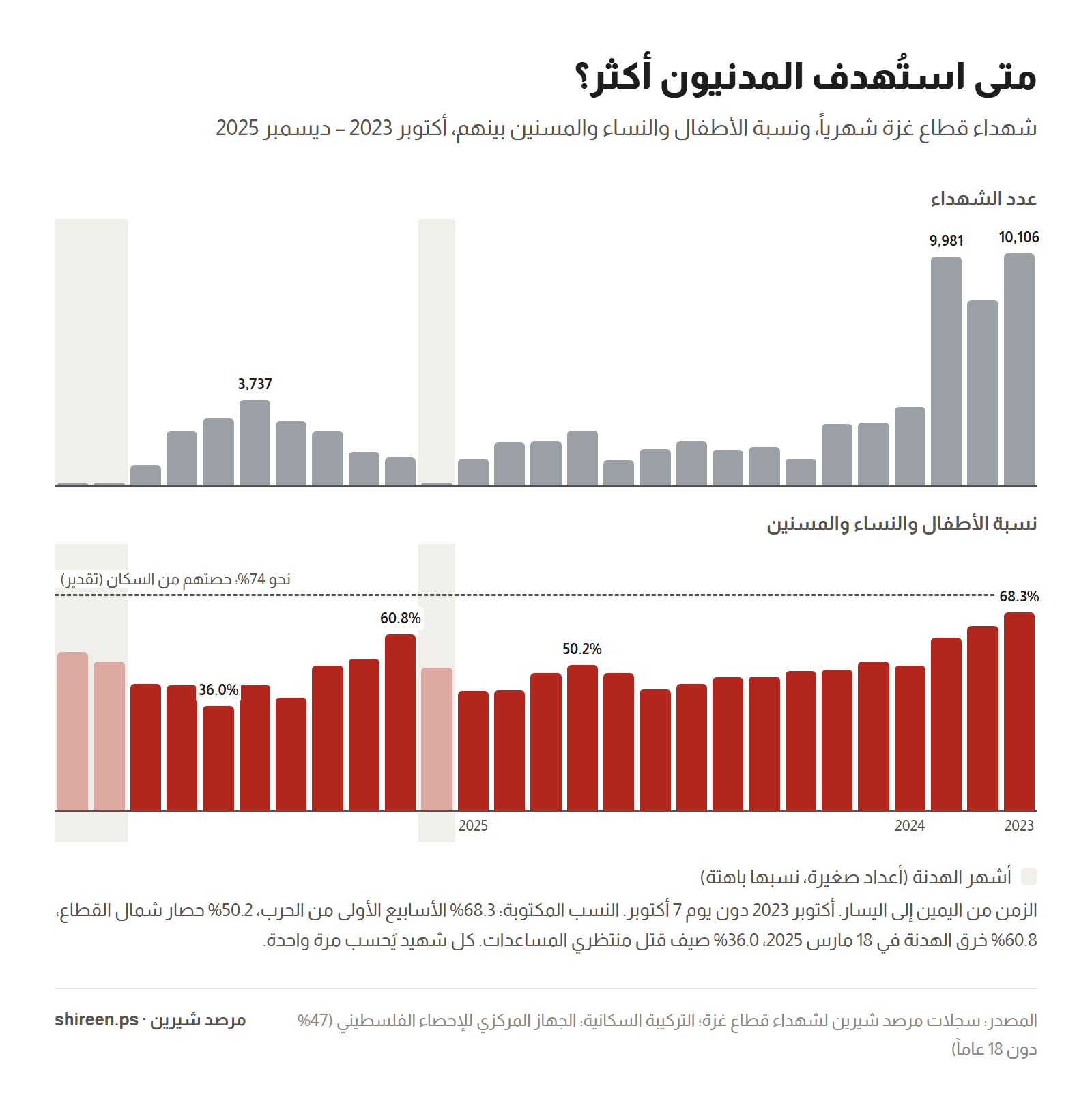
Death was not distributed evenly throughout the year. The report indicates a fragile truce from mid-January that collapsed in mid-March, followed by escalating aggression for most of the year, until a ceasefire was reached in early October. The monthly records of the Shirin Observatory clearly illustrate this pattern: 122 martyrs in February, then a peak of 3,737 martyrs in July, at the height of starvation and the targeting of those awaiting aid. Even after the ceasefire, the Observatory documented 283 martyrs in November and December, and these figures represent only those documented by official sources up to that point.
2025 was not the worst year
It is important to read the 2025 figures in context: it was a year punctuated by two ceasefires, the first from January 19 to March 17, and the second since October 10. In the 141 days that the two ceasefires lasted, the Shirin Observatory documented 1,156 martyrs , while in the remaining 224 days, 18,280 martyrs fell, that is, 94% of the year's martyrs.
Most importantly, the first phase of the war of extermination was far more deadly. The Observatory documented by name 53,057 martyrs in the Gaza Strip during the first fifteen months (from October 7, 2023, to the end of 2024), an average of 117 martyrs per day , more than double the 2025 average (53 per day). In the first twelve weeks alone, the average reached 336 martyrs per day .
| Stage | Number of days | Martyrs documented by name | Daily rate |
|---|---|---|---|
| October 7 – December 31, 2023 | 86 | 28,885 | 336 |
| 2024 | 366 | 24,172 | 66 |
| 2025: Days of Aggression | 224 | 18,280 | 82 |
| 2025: Days of the Two Truces | 141 | 1,156 | 8 |
Source: Records of the Shereen Observatory for Martyrs in the Gaza Strip. The two ceasefires: January 19 – March 17, 2025, and October 10 – December 31, 2025.
However, this most horrific phase is precisely what is missing from the official record, because the death registration system had collapsed. Had the ministry's report extended to 2023 and 2024, its indicators would have been far more dire: an independent household survey published in The Lancet estimated some 75,000 violent deaths in the first sixteen months , and a crude death rate of nearly 33 per thousand inhabitants , almost three times the rate for 2025. Everything in this article about 2025, therefore, paints a picture of a "lighter" year of genocide, not its peak.
Who is being killed? The worst periods in targeting civilians
The number of martyrs alone is not enough to understand what happened. Another question is: Who is being killed? Nearly three-quarters of Gaza's population are children, women, and the elderly, with children under eighteen alone comprising 47% of the population . If these groups constitute nearly three-quarters of the martyrs, it means that the killing is affecting people in proportion to their presence in society; it makes no distinction between anyone.
The Shirin Observatory tracked this percentage month by month among the martyrs of the Gaza Strip since the beginning of the war of extermination, and all records are classified by age and gender:
Four peaks
- The first weeks of the war. Between October 9 and November 5, 2023, 11,518 people were killed, 69% of whom were children, women, and the elderly. In the two weeks from October 16 to 29, the percentage reached 71–72%, almost matching the demographic composition of the population. In the week of October 23–29 alone, 3,548 people were killed. This is the statistical pattern of indiscriminate bombing: homes are bombed with their inhabitants inside, wiping out entire families.
- December 2023, after the collapse of the November truce. The week of December 4–10 was the second bloodiest week of the war: 3,495 martyrs, 63.6% of whom were children, women and the elderly.
- October 2024, the siege of the northern Gaza Strip. After months in which the percentage fluctuated between 42% and 48%, it rose to 50.2% with the siege of Jabalia and northern Gaza that began at the beginning of October 2024.
- On the night of March 18, 2025, the first ceasefire was violated. On that day alone, the Observatory recorded 450 martyrs, including 189 children . Children, women, and the elderly comprised 71.1% of the casualties, the same percentage as the peak in October 2023. The strikes targeted sleeping displaced families at night, killing more than 400 people . As a result, March 2025 (60.8%) recorded the highest monthly death toll since November 2023.
When the percentage decreases but the targeting of civilians does not decrease
The summer of 2025 was one of the deadliest periods of the war in absolute terms, with between 2,366 and 3,737 fatalities per month, yet it recorded the lowest percentage of casualties: 36% in August. This wasn't because civilians survived, but because the victims changed. Between May 27 and mid-August 2025 , at least 1,760 people were killed while trying to obtain food, according to the United Nations, most of them near distribution points run by the so-called "Gaza Humanitarian Foundation." The majority of those standing in the food lines were men and boys trying to feed their families at the height of the famine: starving civilians, not combatants .
The statistic is therefore an accurate indicator of indiscriminate killing, such as bombing homes with their inhabitants inside, but it does not capture targeted attacks against civilian men. For this reason, it should not be interpreted in isolation.
General image
- The percentage declined from about 64% in the first three months of the war to 47% in 2024, and then to 44% in 2025. The war began with a comprehensive bombing of homes, then the methods of killing diversified: ground incursions, sniping, and targeting food queues.
- The monthly percentage did not fall below 36% during the months of aggression. That is, more than a third of the martyrs, in any month, were children, women and the elderly.
- After the ceasefire in October 2025, the killing continued at about one hundred martyrs per month, and the rate dropped to about 35%.
Death has grown young
In safe societies, people die in old age. This was the case in Gaza before the war: in 2022, more than half of the deaths (52.5%) were among those over 65. By 2025, the pyramid had been reversed. The 20-34 age group alone accounted for 28.8% of deaths, up from 4.3%, and the share of those under 20 rose from 17.4% to 28%.
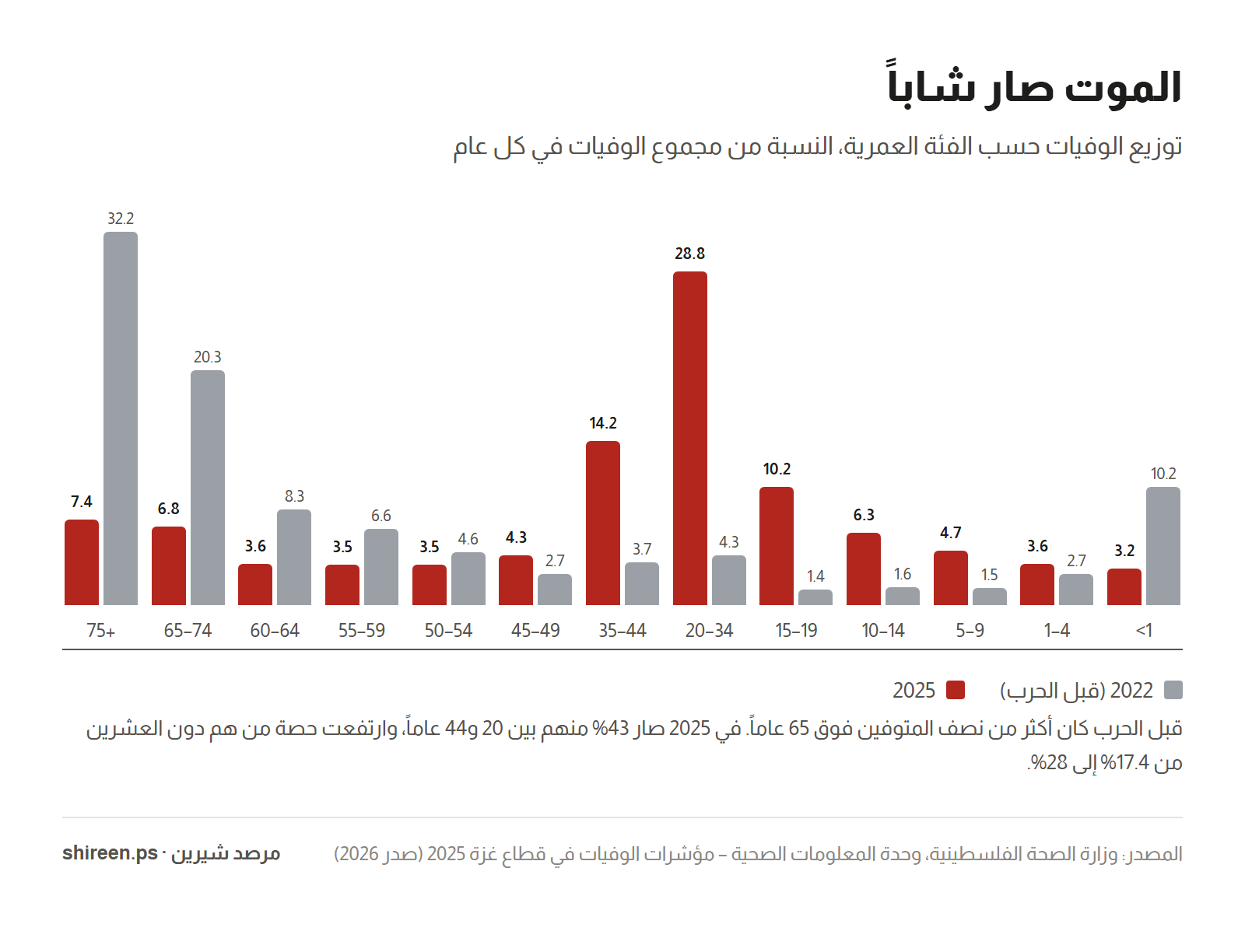
The report reveals the reason for this reversal when it details the causes of death in each age group: war was the cause of 95.8% of deaths of children and adolescents between 5 and 19 years old, 84.5% of deaths of children between one and four years old, and 89.6% of deaths of adults between 20 and 59 years old.
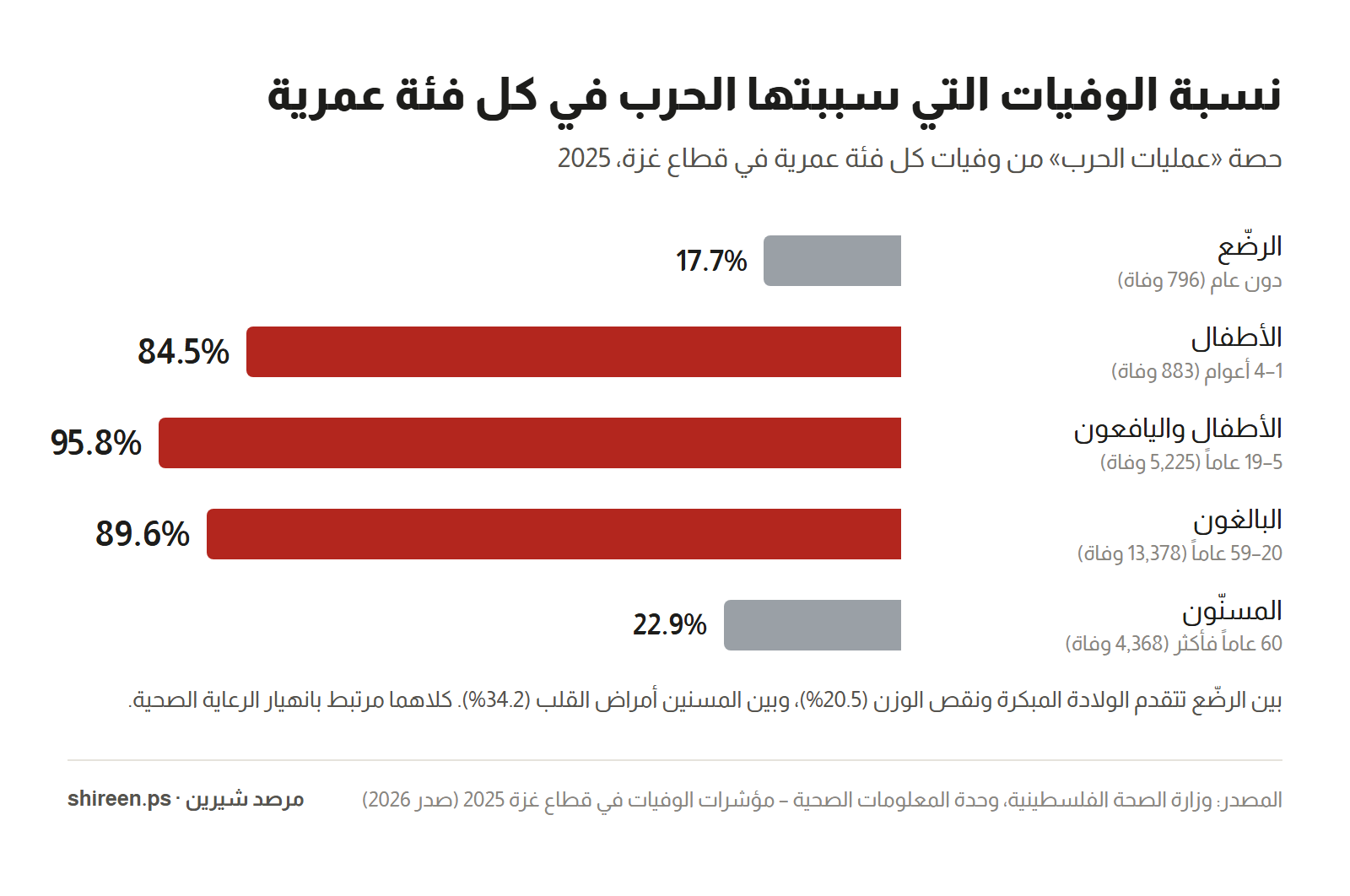
The records of the Shereen Observatory match this picture with remarkable accuracy. Of the 19,436 martyrs documented by the Observatory in the Gaza Strip in 2025, 6,930 (35.7%) were between twenty and thirty-four years old, and 6,359 (32.7%) were under twenty, including 5,266 children who had not reached the age of eighteen.
In the 20–59 age group, male deaths were approximately 4.9 times higher than female deaths, a disparity the ministry attributes to "the direct targeting of working-age men." The report warns of a consequence: thousands of families are now headed by women who have lost their fathers and adult sons.
Children: Bombing on one side, and the collapse of care on the other.
The report’s most egregious finding is the mortality rate of children under five: 33.4 per thousand live births in 2025, compared to 13.6 in 2022. Of every thousand children born alive in Gaza today, 33 die before reaching the age of five.
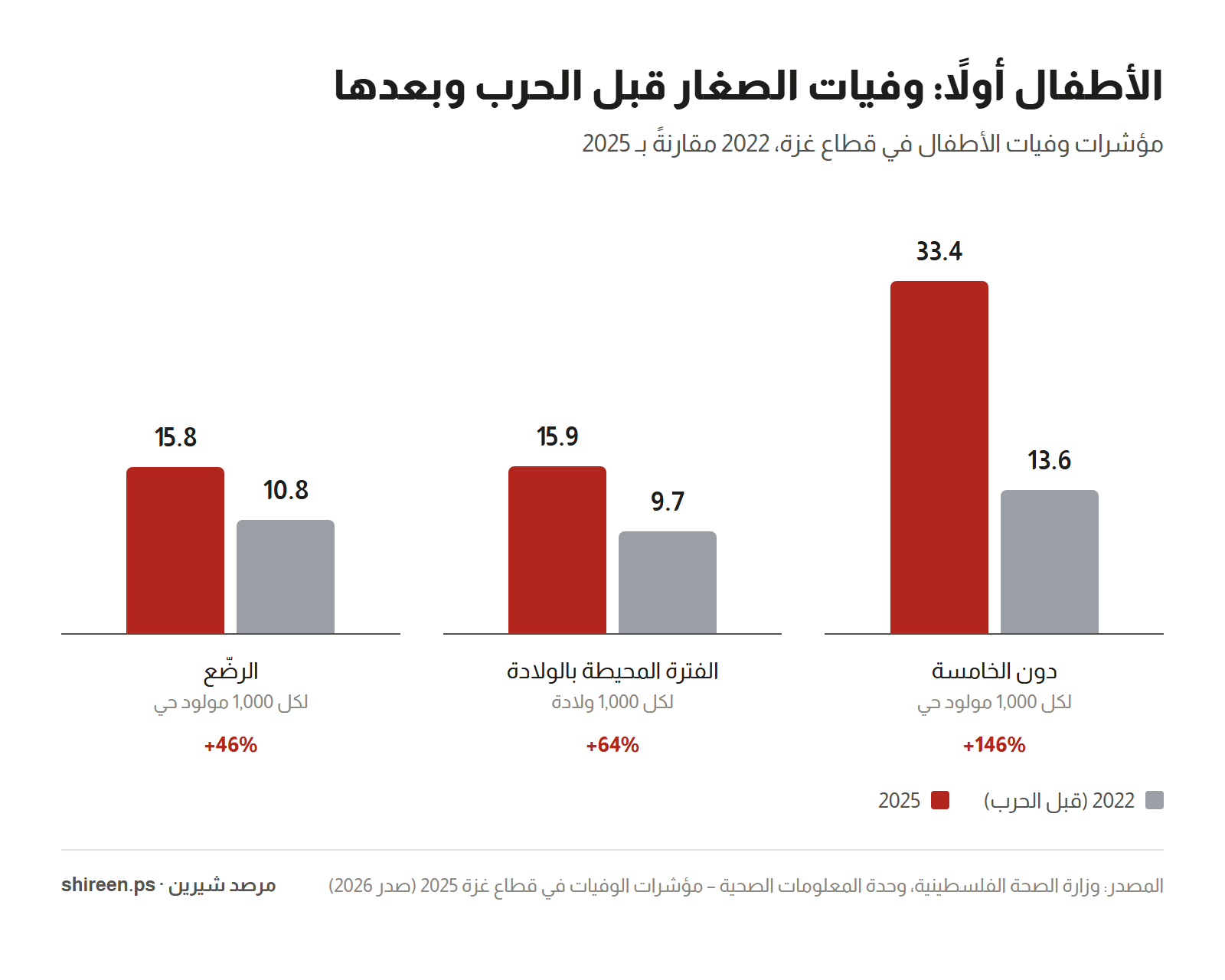
Even more alarming is that this rate remains high even after excluding those killed by bombing: 15.8 per thousand, higher than before the war. The ministry says this shows “that the war has had a lasting health impact on children that goes beyond direct injury,” through the deterioration of nutrition, primary healthcare, and immunization services—an impact that “is likely to persist even after the cessation of hostilities.”
In their first year , 796 infants died out of 50,227 live births. Of these, 141 were killed directly by the war (17.7%), making bombing the second leading cause of infant death, up from just 0.4% in 2022. The leading cause was premature birth and low birth weight (20.5%), both directly linked to maternal malnutrition and the collapse of prenatal care. The share of infectious diseases among infant deaths more than doubled, from 5.1% to 10.2%.
- 38.9% of infant deaths occurred in the first week of life, the period most dependent on incubators, intensive care and electricity, which is exactly what was destroyed or stopped in the sector's hospitals.
- The neonatal mortality rate rose from 6.6 to 9.8 per 1,000 live births, and the perinatal mortality rate to 15.85 per 1,000 live births, with 494 stillbirths recorded. The ministry attributes this to the systematic targeting of hospitals and health facilities.
- Of the 883 children between the ages of one and four who died in 2025, 84.5% were killed by war.
Qusay Abu Labda is one of these infants. He was two weeks old when the occupation bombed his family’s house east of Deir al-Balah on May 17, 2025, and he was martyred along with his father Muhammad (38 years old), his mother Safa (35 years old), and his brothers Ahmed (12 years old), Ayesh (10 years old), and Suwar (5 years old).
Women: eight times
The mortality rate among women of reproductive age jumped from 0.7 per 1,000 women in 2022 to 5.9 in 2025, more than eightfold. According to the Ministry, these women are among those most in need of specialized healthcare, in a sector where there are already insufficient maternity and prenatal care units.
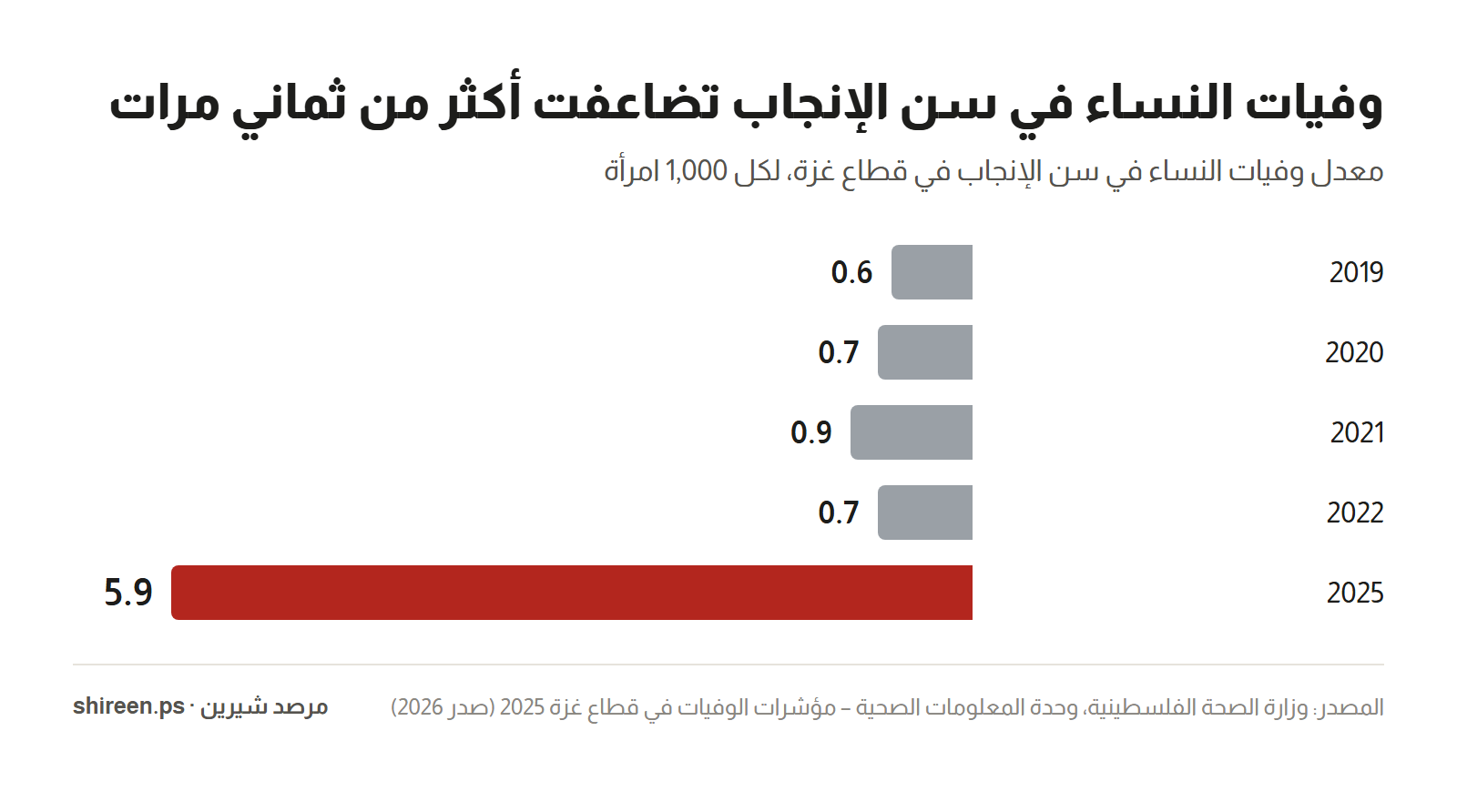
The Shereen Observatory recorded 2,667 female martyrs in the Gaza Strip in 2025, along with 5,266 children and 972 elderly people. This means that children, women, and the elderly together constituted 44% of the martyrs.
Silent death
If we exclude all those killed by bombing and gunfire, Gaza in 2025 would still have a higher death rate than before the war: 3.46 per thousand compared to 2.8, meaning approximately 7,364 deaths, an increase of about 23% over other deaths in 2022. This is the effect of destroying the very conditions of life.
- Heart disease: The death rate from heart disease rose from 49.8 to 89.0 per 100,000 people. According to the report, it remains the leading "natural" cause of death in a sector where medications for chronic diseases and follow-up care for patients have been disrupted.
- Cancer: The death rate from this disease has fallen by more than half (from 42.2 to 19.3). This is not because patients survived, but, as the ministry says, because it "reflects the collapse of diagnostic and registration services and the misclassification of the cause."
- Starvation: On August 22, 2025, famine was officially declared for the first time in Gaza , where more than half a million people were trapped. In July alone, more than 12,000 children were diagnosed with acute malnutrition. As of September 19, 2025 , starvation had killed at least 440 people, including 147 children , according to the Ministry of Health.
Independent research confirms the same trend. The first independent household survey within the sector, published in The Lancet Global Health in 2026, estimated 8,540 additional non-violent deaths above expected between October 2023 and January 2025, prior to the declaration of famine.
This death does not appear in the news bulletins, but it is precisely what the Genocide Convention describes as “deliberately inflicting on the group conditions of life calculated to bring about its physical destruction in whole or in part.”
Unparalleled in modern warfare
In terms of killing per capita, Gaza surpasses all comparable modern wars. In the first 15 months of this genocidal war, the killing rate was nearly four times higher than the highest estimate for the Iraq War. Even in 2025 alone, the year that saw two ceasefires, 813 out of every 100,000 Gazans were killed directly, exceeding even the highest estimates for Iraq. The difference is hundreds of times greater than in Afghanistan and Ukraine during their worst years for civilians.
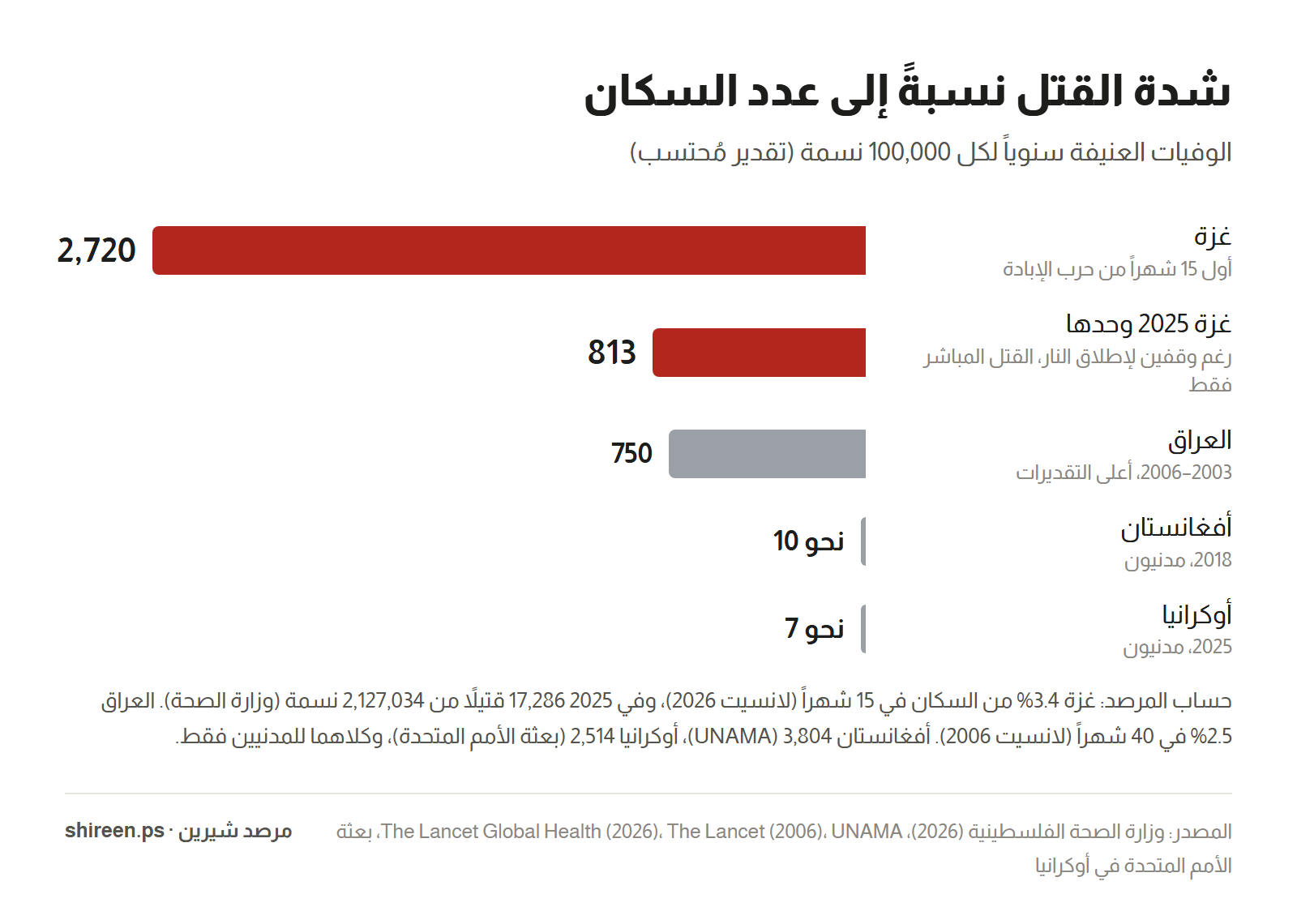
Iraq: A 2006 Lancet study estimated some 601,000 violent deaths in the 40 months following the invasion, while the Iraqi Family Health Survey estimated a much lower figure. Afghanistan: The UN documented 3,804 civilian deaths in 2018, a record high for the country. Ukraine: The UN mission documented 2,514 civilian deaths in 2015, the worst year for civilians since 2022.
| War | Pre-war mortality rate (per 1000) | During the war (per 1000) | Doubling |
|---|---|---|---|
| Gaza, October 2023 – January 2025 | 2.8 | About 33 | About 12 times |
| Gaza, 2025 | 2.8 | 11.59 | More than 4 times |
| Iraq, 2003–2006 | 5.5 | 13.3 | Approximately 2.4 times |
| Syria (2007 vs. 2014) | 3.7 | 6.5 | Approximately 1.7 times |
| Ukraine (2016 vs. 2023) | 14.7 | 13.1 | No apparent rise |
Sources: Palestinian Ministry of Health, Lancet Global Health Survey, Lancet Iraq Study, World Bank and United Nations data via TheGlobalEconomy and CEIC .
Gaza is unique in three ways:
- Children are at the heart of the targeting. Children were 35% of Gaza’s martyrs in the last months of 2023, and 27% in 2025, compared to 24% of civilian deaths in Afghanistan in 2018, and 5% in Ukraine (table below).
- There is nowhere to run. Millions of Ukrainians and Syrians have left their countries. As for the people of Gaza, they are trapped in a closed coastal strip, displaced from one bombardment area to another.
- Density over time. Approximately 3.4% of the population was killed within 15 months. Iraq needed 40 months to reach 2.5% according to its highest estimates, and Afghanistan did not reach these rates in twenty years.
| War | The dead | Among them are children | Child percentage |
|---|---|---|---|
| Gaza, October 7 – December 31, 2023 ( Shereen Observatory ) | 28,885 | 10,092 | 35% |
| Gaza, 2025 ( Shireen Observatory ) | 19,436 | 5,266 | 27% |
| Afghanistan, 2018 ( UNAMA ) | 3,804 | 927 | 24% |
| Ukraine, February 2022 – September 2025 ( United Nations Mission ) | 14,383 | 738 | 5% |
The figures for Afghanistan and Ukraine are for civilians only, and the figures for Gaza are for all martyrs, so if the percentage of children in Gaza differs, it is less than reality, nothing more.
The numbers bear witness to the genocide
On September 16, 2025, the UN Independent International Commission of Inquiry, chaired by Navi Pillay, former President of the International Criminal Tribunal for Rwanda, concluded that Israel had committed genocide against Palestinians in Gaza , finding reasonable grounds to conclude that four of the five acts defined in the 1948 Genocide Convention had been committed. The Ministry of Health report provides digital evidence for each of these acts.
| The act in the Genocide Convention | What the death records attest to |
|---|---|
| The group members were killed | 17,286 killed by direct attacks in one year (70.1% of deaths), and 73,510 martyrs documented by name since October 7, 2023 |
| Inflicting serious physical or psychological harm | Families wiped out in a single day, working-age men die 4.9 times more often than women, and families lose their breadwinners. |
| Subjecting the group to living conditions intended to destroy it | High death rates even without counting killings, a declared famine, and 440 deaths from starvation, including 147 children. |
| Imposing measures aimed at preventing childbirth | Deaths of women of reproductive age increased eightfold, with 494 stillbirths, and deaths of children under five increased by 146%. |
And it is not just the UN committee. In August 2025, the International Association of Genocide Researchers issued a resolution stating that Israel’s policies in Gaza meet the legal definition of genocide, and Amnesty International and other human rights organizations reached the same conclusion.
In January 2024, the International Court of Justice ruled that the Palestinians' right to protection from acts of genocide was reasonable and issued binding provisional measures to protect it. The year 2025 followed with a death rate more than four times its pre-war level, and child deaths more than doubled. The numbers prove the acts, but the specific intent, the crucial element of the crime of genocide, was established by the UN commission based on statements by Israeli officials, which it considered direct evidence, along with the pattern of behavior revealed by these indicators.
The myth of "the cleanest ratio in history"
Israeli officials and defenders of the occupation claim that their army has achieved the lowest civilian-to-combatant casualty ratio in the history of urban warfare , roughly one civilian for every combatant. This claim falls apart with a simple calculation.
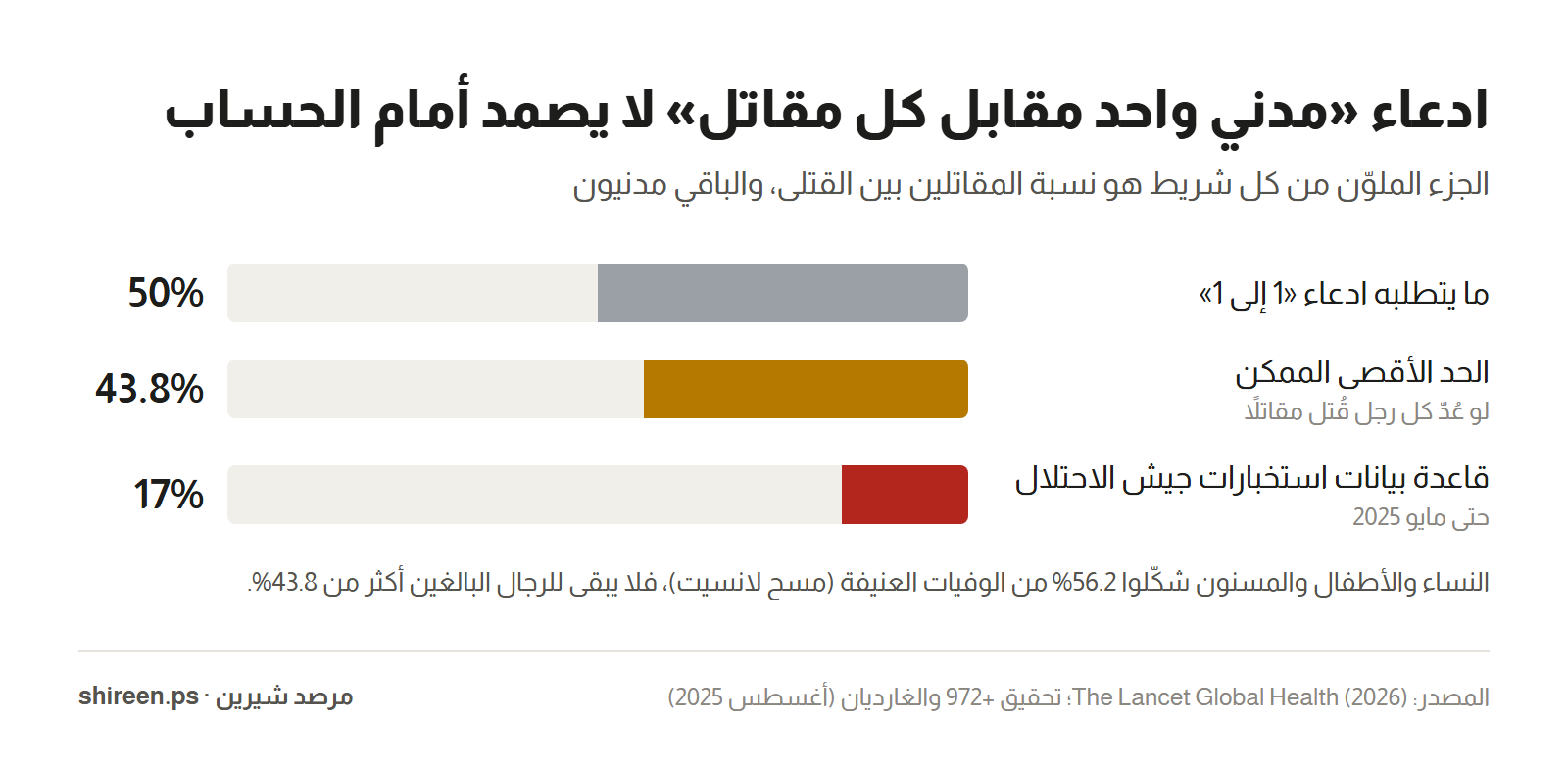
According to an independent survey in The Lancet, women, children, and the elderly accounted for 56.2% of violent deaths , leaving only 43.8% for adult men. For a 1:1 ratio to be accurate, half of those killed would have to be combatants, which is mathematically impossible even if every man killed were considered a combatant. This assumption is inherently illogical and illegal, as the men killed in Gaza included doctors, paramedics, journalists, teachers, and laborers. The Shereen Observatory alone documented 91 journalists among the 2025 victims.
In fact, the Israeli army's own data contradicts this claim. According to a joint investigation by The Guardian and +972 magazine, its military intelligence database, up to May 2025, recorded approximately 8,900 combatants killed or "likely killed" out of 53,000 martyrs— only 17% . This means that 83% of the martyrs were civilians , roughly five civilians for every combatant (as they were classified). The investigation also revealed that some martyrs were labeled "terrorists" after their deaths without any verification, and that officials publicly promoted a 1:1 ratio that they did not believe in private .
Data limits: Minimum, not the full number
The ministry itself acknowledges the limitations of its record. The figure of 24,650 only includes deaths that were “officially documented,” for which certificates were issued and their causes classified up to the date of data withdrawal in July 2026. All electronic registration systems were disrupted in the war, so the ministry formed committees in government hospitals to register deaths, and verified the data with the WHO’s ANACoD3 tool, and work is still ongoing to register what has not been registered.
Israel and organizations like the Henry Jackson Society question the ministry's figures. However, an independent survey published in The Lancet actually reinforced them rather than refuted them: it found the ministry's figures to be about 35% lower than its estimate , with the demographics of the victims remaining consistent. Israel rejected the UN commission's report, calling it distorted and false , while the International Court of Justice set a deadline of 2029 for submissions in the case.
This means that the figures from the Ministry and the Shereen Observatory represent the minimum documented data . International comparisons remain approximate due to differences in the methodologies of the sources, but the disparity between Gaza and other areas is too significant to be explained by methodological differences.
Sources
- Palestinian Ministry of Health, Health Information Unit: Annual Mortality Report 2025 (September 20, 2026) · Arabic PDF Version
- Shirin Observatory – Martyrs of 2025 , 2024 , 2023
- World Health Organization – First Confirmation of Famine in Gaza (August 2025) · Integrated Phase Classification (IPC) Report
- Al Jazeera – Starvation death toll according to the Ministry of Health
- Spagat et al., Gaza Mortality Survey – The Lancet Global Health (2026) · Journal commentary on the survey · AOAV presentation
- Burnham et al., Mortality after the 2003 invasion of Iraq – The Lancet (2006) · Iraq Family Health Survey – NEJM (2008)
- UNAMA – Civilian casualties in Afghanistan 2018
- United Nations Human Rights Monitoring Mission in Ukraine – 2025
- TheGlobalEconomy – Mortality rate in Syria · CEIC – Ukraine
- OHCHR – International Commission of Inquiry Report (September 2025) · Amnesty International Statement · September 2026 Statement
- Forbes – Decision of the International Association of Genocide Researchers
- +972 Magazine – Israeli Intelligence Database (83% Civilians) · Al Jazeera's Investigation
- JNS – Claim of a 1:1 ratio · Lieber Institute – Limits on civilian-to-combatant ratios
- CNN – Israel's response · SAnews – ICJ order (May 2026) · Henry Jackson Society